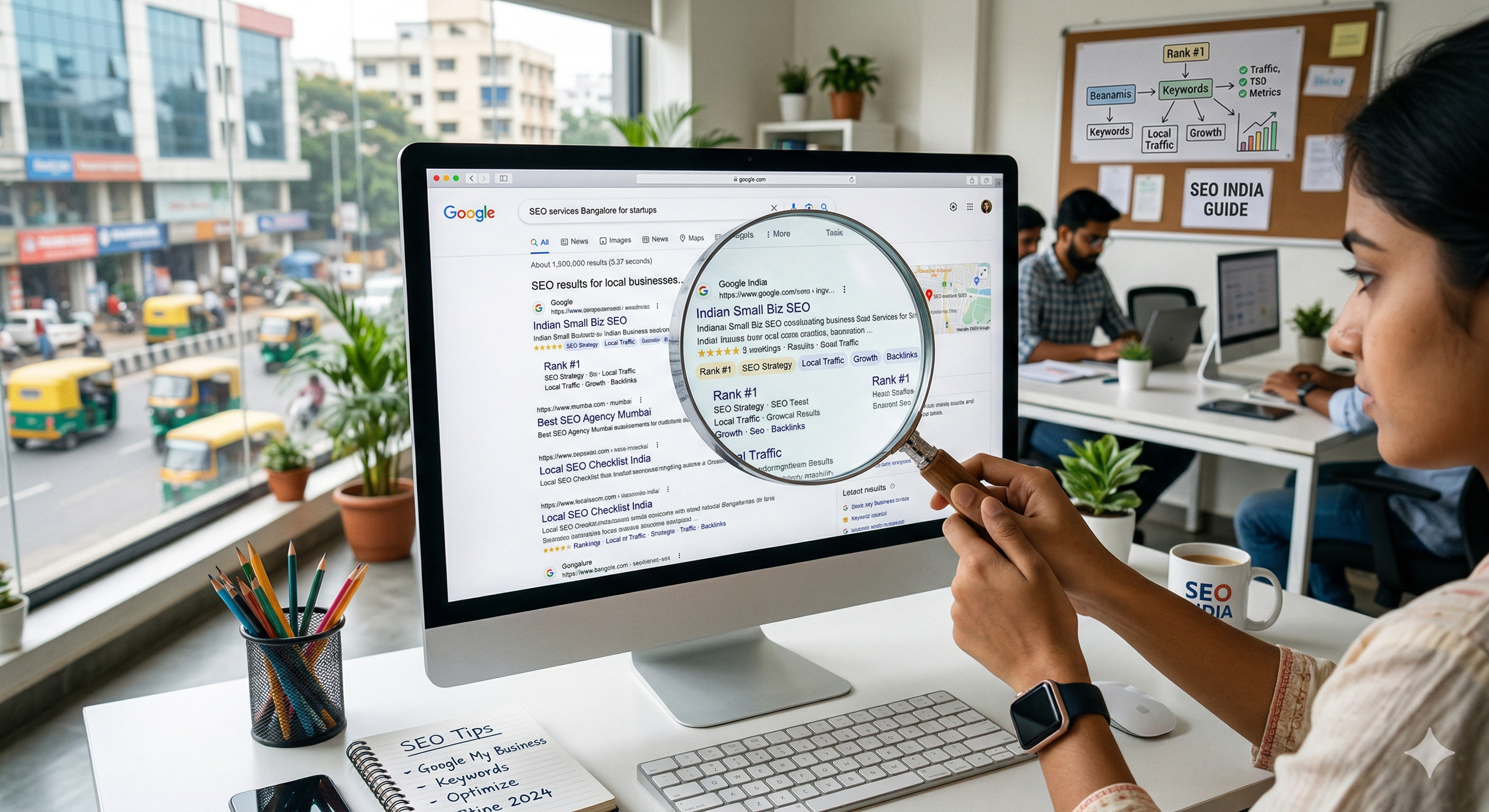
The Ultimate SEO Guide for Small Businesses in India
Introduction
If you own a small business in India and you want more customers to find you online, Search Engine Optimization (SEO) is one of the most powerful tools available to you. Yet for many small business owners, SEO remains a mystery – something they know they should be doing but are not quite sure where to start.
This guide is here to change that. We are going to break down SEO into simple, actionable steps that any small business owner can understand and begin implementing, even without a technical background. By the end of this guide, you will have a clear roadmap for improving your website's visibility on Google and attracting more customers organically.
What Is SEO and Why Does It Matter?
SEO stands for Search Engine Optimization. In simple terms, it is the practice of improving your website so that it appears higher in search engine results when people search for relevant terms. The higher your website appears in the results, the more people will click on it, and the more potential customers you attract.
Consider this: when someone searches for "digital marketing agency in Mumbai" or "affordable website design India," they are likely to click on one of the first few results that appear. If your website appears on page 2 or beyond, it is essentially invisible – studies show that less than 1% of users scroll past the first page of Google results.
SEO matters because organic search traffic is free, consistent, and highly targeted. Unlike paid advertising where you stop getting traffic the moment you stop spending, SEO builds a long-term asset that continues to generate traffic and leads for your business over time.
Part 1: The Foundations of SEO
Keyword Research
Keyword research is the foundation of any effective SEO strategy. Keywords are the words and phrases that your potential customers type into Google when looking for businesses like yours. Your goal is to identify the most relevant keywords for your business and optimize your website around them.
Start by brainstorming the terms your customers would use to find you. Think about: What products or services do you offer? What problems do you solve? Where are you located? For example, a dentist in Pune might target keywords like "best dentist in Pune," "dental clinic Pune," "teeth whitening Pune," and so on.
Use tools like Google Keyword Planner (free) or Ubersuggest to check how many people search for these terms each month and how competitive they are. Focus on keywords that have a decent search volume but are not so competitive that you have no realistic chance of ranking for them.
On-Page SEO
On-page SEO refers to optimizing the content and structure of your website pages to rank for your target keywords. Here are the key elements:
Title Tags: Every page on your website should have a unique title tag that includes your primary keyword. The title tag appears as the headline in search results. Keep it under 60 characters.
Meta Descriptions: The meta description is the brief text that appears below the title in search results. While it does not directly affect rankings, a compelling meta description can significantly improve your click-through rate. Include your keyword and a clear call to action.
Headings: Use heading tags (H1, H2, H3) to structure your content. Your H1 should include your primary keyword and clearly describe what the page is about.
Content: Your page content should be relevant, informative, and genuinely useful to your visitors. Include your target keywords naturally throughout the content, but don't stuff keywords in a way that feels unnatural – Google can detect this and may penalize your site.
Images: Give your images descriptive file names and fill in the alt text field with descriptions that include relevant keywords. This helps Google understand what your images are about.
URLs: Keep your URLs clean and descriptive. For example, www.yoursite.com/dental-services-pune is much better than www.yoursite.com/page?id=123.
Part 2: Technical SEO
Site Speed
Google uses page speed as a ranking factor. Slow websites not only rank lower but also have higher bounce rates because users leave before the page loads. To improve your site speed, optimize your images (use compressed formats), minimize unnecessary code, and choose fast hosting.
Mobile-Friendliness
With the majority of searches now happening on mobile devices, Google prioritizes mobile-friendly websites in its rankings. Ensure your website is fully responsive and provides an excellent experience on smartphones and tablets.
SSL Certificate
Google shows a preference for secure websites (those with HTTPS rather than HTTP). An SSL certificate ensures your website is secure and shows the padlock symbol in the browser. This builds trust with visitors and is a confirmed ranking signal.
Site Structure
A clear, logical site structure helps both users and search engine crawlers navigate your website. Make sure all your important pages are accessible within a few clicks from your home page, and that you have a clear navigation menu.
Part 3: Local SEO for Indian Businesses
For most small businesses in India, local SEO is the most impactful form of SEO. Local SEO focuses on helping your business appear in searches with local intent – for example, "plumber in Andheri" or "CA near me."
Google Business Profile
Claiming and optimizing your Google Business Profile (formerly Google My Business) is the single most impactful thing you can do for local SEO. When you have a complete, accurate Google Business Profile, your business can appear in Google's Local Pack – the map and business listings that appear at the top of local search results.
Make sure your profile includes accurate business name, address, and phone number; your business hours; high-quality photos of your business; a compelling business description; and your website URL. Encourage satisfied customers to leave reviews on your Google Business Profile, as reviews are a significant local ranking factor.
Local Citations
A citation is any online mention of your business's name, address, and phone number. Consistent citations across directories like JustDial, IndiaMART, Sulekha, and industry-specific directories signal to Google that your business information is accurate and trustworthy.
Local Content
Create content that is relevant to your local area and audience. Write blog posts about local events, local business topics, or issues specific to your city or neighbourhood. This helps your website rank for locally-relevant search queries.
Part 4: Content Marketing and SEO
Content marketing and SEO go hand in hand. Google rewards websites that consistently publish high-quality, relevant content. A blog is one of the most effective ways to build your content library and target a wide range of keywords.
Here are some content ideas for small businesses:
- How-to guides related to your industry
- Answers to common customer questions
- Case studies or success stories from your customers
- News and updates about your industry
- Lists (like "10 things to consider before hiring a web designer")
Consistency is key. Publish new content regularly – even once or twice a month is better than nothing – and over time your website will build authority and rank for an increasing number of keywords.
Part 5: Link Building
Links from other websites to yours are a powerful ranking signal. Google interprets links as votes of confidence – when a reputable website links to you, it signals that your content is trustworthy and valuable.
For small businesses, some of the easiest link building strategies include: getting listed in relevant business directories, asking industry associations or local chambers of commerce for a link, collaborating with complementary businesses on content, and reaching out to journalists or bloggers who cover your industry.
Avoid any black-hat practices like buying links or participating in link schemes – these can result in Google penalties that can severely damage your rankings.
Conclusion
SEO is not a quick fix – it requires consistent effort over time. But the results are worth it. A well-executed SEO strategy can deliver a steady stream of high-quality, free traffic to your website for years to come, giving your small business a competitive edge that is difficult for competitors to replicate.
If you need help with your SEO strategy, Computifi offers professional SEO services as part of our website and digital marketing packages. Our team of SEO experts can help you identify the right keywords, optimize your website, and build the authority you need to rank well on Google. Contact us today to learn more.